Central Brighton Real Ale
The Adventure
A real ale pub crawl around central Brighton
0Stops
0.0Trek Miles
Make it yours
Not quite your route?
Remix this crawl to swap pubs, reorder stops and save your own version. Or just run it backwards.
The Pub Crawl
12 stops curated for this crawl.
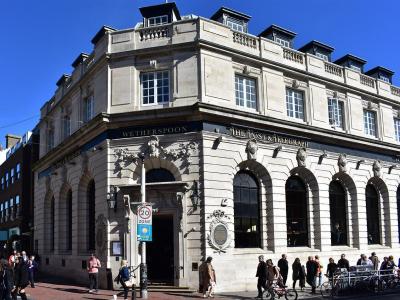
- 1The Post & Telegraph, located on North Street, is housed in a Grade II listed building originally constructed between 1921 and 1923 as a branch of the National Provincial Bank. Designed by the prominent local architects Clayton & Black in a Neoclassical French style reminiscent of Louis XVI, the building features a grand rusticated facade and tall, round-arched windows. For most of the 20th century, it operated as a major financial hub, eventually becoming part of the National Westminster (NatWest) network following a 1968 merger. The pub’s name pays homage to the site’s deeper history as the former headquarters of the Brighton Gazette, Hove Post, and Sussex Telegraph newspapers. These publications occupied the premises before the bank's construction, with the Gazette notably remaining in the city until its final edition in 1981. After the bank branch closed, the building served briefly as a sports bar and nightclub before being acquired by J D Wetherspoon. Opening in December 2010, the pub now combines its architectural heritage—complete with original zodiac-themed door reliefs and sophisticated wooden interiors—with modern services like the Wetherspoon app and a rotation of local real ales.
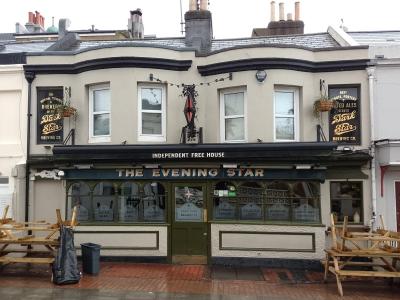
- 2The Evening Star on Surrey Street is widely celebrated as Brighton’s original craft ale house, having poured beer on the site since 1854. Originally built as part of a terrace for railway workers, the pub served as a standard local for over a century under various owners, including Smithers and Sons and later the Tamplin's brewery empire. Its modern legacy began in 1992 when it became a free house under owners Pete Skinner and Pete Halliday, who transformed the venue into a "permanent real ale festival" that eventually featured nearly 3,000 different beers by the turn of the century. The pub's most significant historical contribution is being the birthplace of the Dark Star Brewing Co, which was founded in its cellar in 1994 using a custom-built "Russian doll" brewing kit designed to fit the cramped space. This microbrewery pioneered the use of American hops in the UK, creating iconic ales like Hophead before moving to larger premises in 2001. Today, the Evening Star remains an independent free house known for its minimalist, "plain" interior—focused entirely on the quality of its 22 taps—and recently received a 2025/2026 CAMRA award for 33 consecutive years of inclusion in the Good Beer Guide.
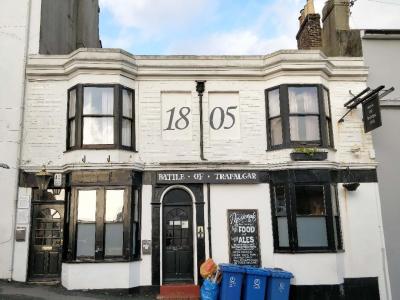
- 3The Battle of Trafalgar has been a fixture of the Brighton community since at least 1855, serving as a "beerhouse" or public house for over 170 years. Historically, its location near the brickfields and flint pits made it a popular watering hole for local labourers. The pub’s interior reflects its long-standing presence, with architectural plans for significant alterations dating back to 1952–1953. For much of its early life, it was owned by the local Tamplin & Sons brewery from 1882 until they were acquired by Watney’s in the 1960s. In more recent decades, the pub has maintained its reputation as a "quintessential British local," known for resisting modernisation in favour of a traditional, quirky atmosphere. Its name and decor pay tribute to the 1805 naval engagement, with a homely menagerie of nautical-themed prints, photographs, and paintings lining the walls. Through management changes and a notable community effort in 2024 to preserve its traditional character, the pub remains a staple for cask ale enthusiasts and locals seeking an authentic experience just steps from Brighton Railway Station.
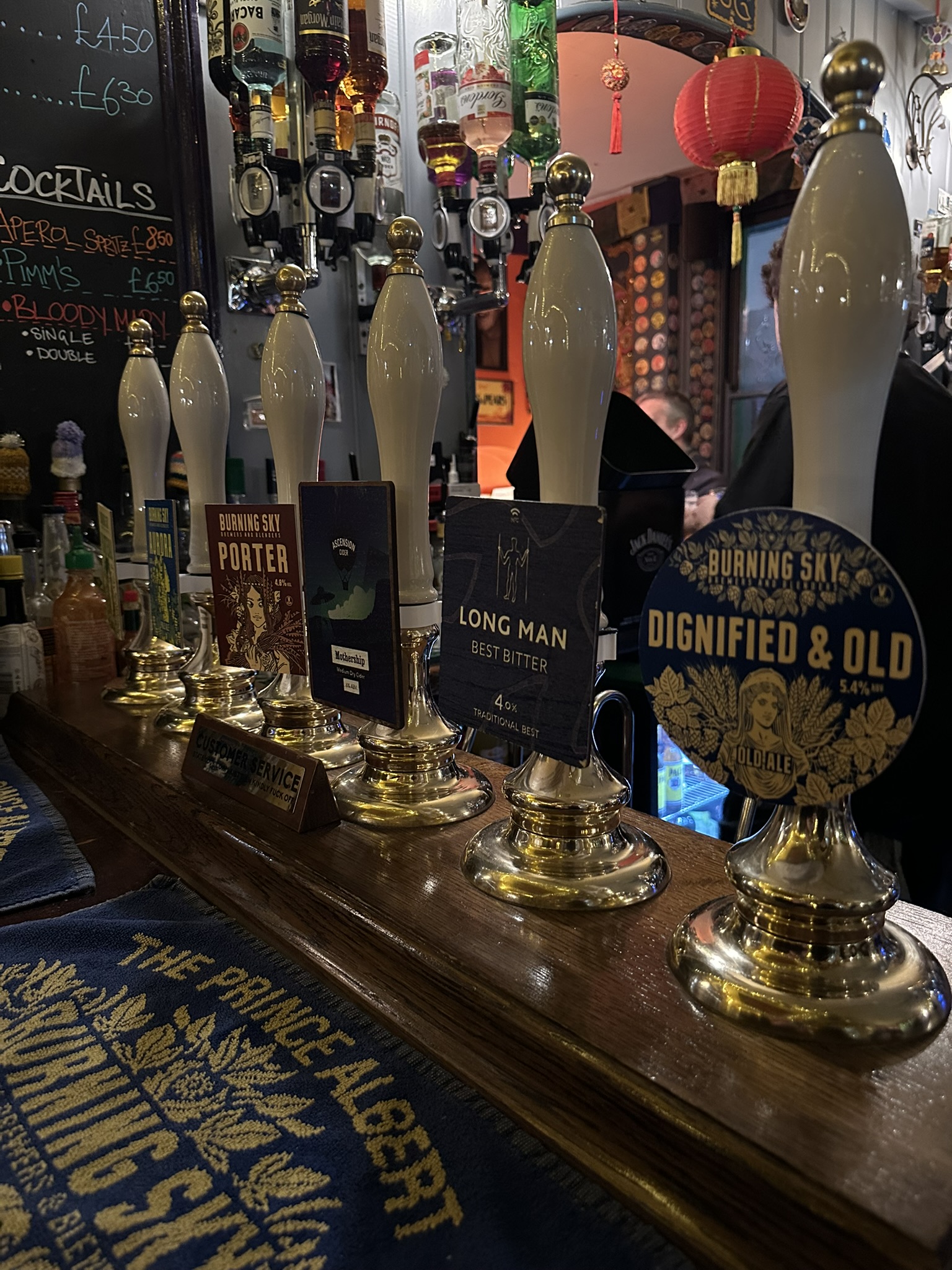
- 4The Prince Albert, located at the top of Trafalgar Street, began its life as a three-story town house built in 1848 before being converted into a pub in 1860. Its grandiose Victorian exterior originally served as a hotel for travelers arriving at the nearby Brighton railway station. Over the decades, the pub has evolved into one of Brighton’s most iconic grassroots music venues, hosting live performances since at least the 1970s. Its history is rooted in a "fierce independence," maintaining a family-run atmosphere while resisting the closure of independent venues that has affected much of the city. The pub's historical significance is physically represented on its exterior walls, which have become a landmark for street art. In 2004, the side wall became home to Banksy's world-famous "Kissing Coppers" mural, an original piece that remained on-site until it was removed for preservation and sold at auction in 2014; a replica protected by Perspex stands in its place today. In 2013, the facade was further transformed by local artists into a massive "Icons" mural, featuring over 25 deceased music legends—ranging from John Peel and Kurt Cobain to Amy Winehouse—as a tribute to the pub’s enduring musical heritage. Currently, the Albert continues to be a vital hub for emerging talent, balancing its legacy as a traditional "boozer" with its status as a premier small gig space.
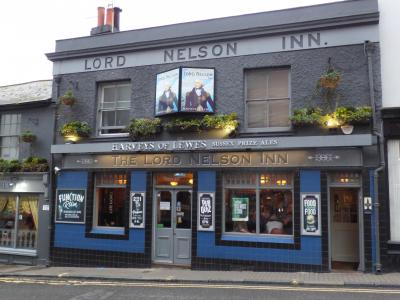
- 5The Lord Nelson Inn, fondly known as "The Nelly," has occupied its site in the North Laine since 1848, officially taking its name in 1854 to honour Admiral Horatio Nelson. For much of its early history, it was a staple of the local Kemp Town Brewery. The building underwent a significant refit during the inter-war period of the 1930s, and it still retains many of these features, including a traditional wooden bar counter. The pub’s modern era began in 1980 when it was acquired by Harvey’s Brewery, making it one of the few long-standing Harvey’s houses in the city. Despite internal updates in 2014 and 2016 to open up the floor plan, the inn has carefully preserved the footprint of its two original front bars, maintaining a rustic and unspoilt atmosphere. Today, it is recognised as a quintessential community hub, celebrated for its well-kept cask ales and its role as a host for local culture, including the long-running music sessions and a regular quiz night.
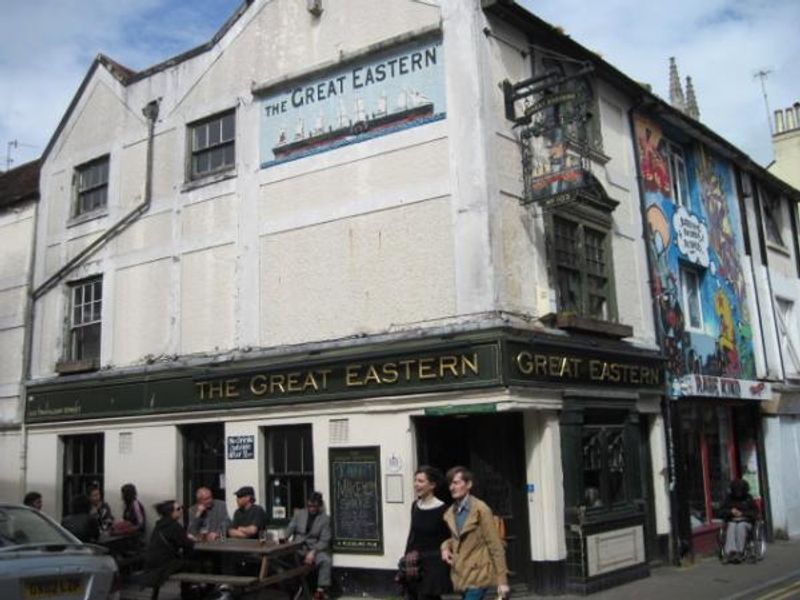
- 6The Great Eastern, located on the corner of Trafalgar Street in the North Laine, has its roots in the mid-19th century, with records suggesting the building was originally a pub named the "Maud of the Mill". In 1862, it was renamed the Great Eastern, likely taking its name from Isambard Kingdom Brunel’s massive steamship, the SS Great Eastern, which had been launched a few years prior. Architecturally, the pub is a striking example of a traditional corner house, featuring distinctive curved glass doors that have remained largely unchanged since the 1860s. In recent history, the pub became a focal point for community activism in 2019 when its long-term lease under the independent Pleisure Pub Company was threatened by the property owner, Ei Group (now part of Stonegate). A petition signed by over 4,000 regulars successfully lobbied for the pub to maintain its unique character and "spirit-specialist" focus during the transition. Today, it is celebrated as a "proper pub" devoid of TV screens and gaming machines, instead focusing on its massive whiskey and bourbon collection and rotating cask ales.
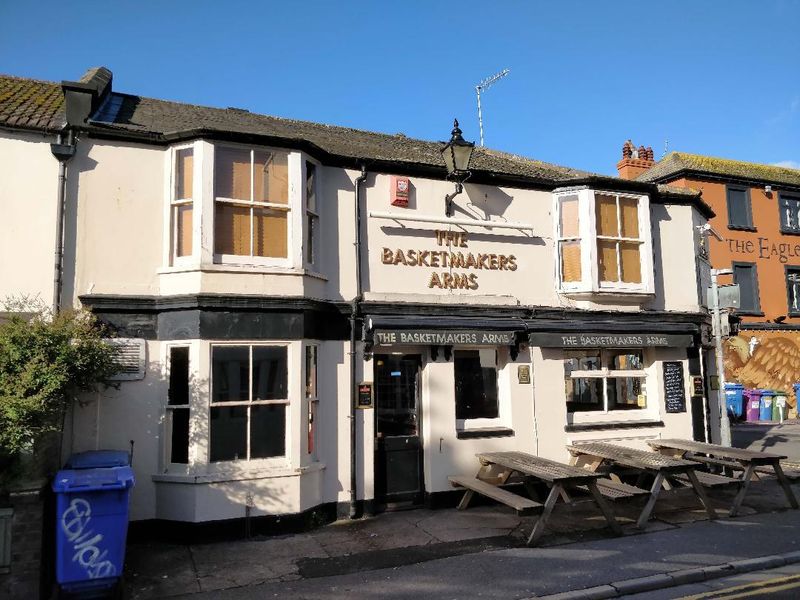
- 7The Basketmakers Arms on Gloucester Road originated in 1852 as a combined home and workshop for Thomas Knight, a local artisan who specialised in making wicker baskets and sieves. By 1855, Knight diversified his business by selling beer from his shop, initially naming the establishment the Brokers Arms. As the beer house grew in popularity over his original trade, he officially renamed it the Basketmakers Arms by 1862, a nod to the thriving local industry that once defined this quarter of the North Laine. The pub is famously recognised for its interior, which serves as a living archive of its long history. Its most distinctive feature is a vast collection of vintage tobacco tins—some dating back to the 1850s—which are fixed to the walls and filled with handwritten notes, poems, and secrets left by generations of patrons. Managed by the legendary landlord Peter "Blue" Dowd for nearly 30 years starting in the late 1980s, the pub transitioned from a free house to a Gale’s tied house before being acquired by Fuller’s in 2005. Despite these corporate changes, it has maintained its reputation as a Brighton institution, winning numerous awards for its cask ales and locally sourced seafood.
- 8
08
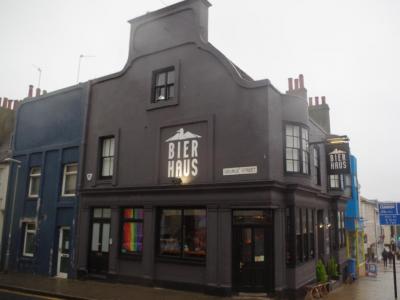
The King and Queen was established in 1779 when an existing farmhouse was granted a liquor license to serve agricultural workers and spectators attending cricket matches on the nearby Steine. Named in honour of King George III and Queen Charlotte, the original building was a bow-fronted Georgian structure. Throughout the 19th century, the pub became a vital hub for local commerce, serving as the headquarters for the Brighton Corn Exchange every Thursday until the market moved to its current location in 1868. It also maintained a close relationship with the adjacent Church Street infantry barracks, even featuring a dedicated serving hatch to provide "thirsty soldiery" with liquid refreshment. The pub's current iconic appearance dates to a major rebuilding project in 1931–32 by renowned local architects Clayton and Black. They transformed the Georgian inn into an elaborate Mock Tudor landmark, complete with decorative timber framing, heraldic stained glass, and a cavernous interior designed to resemble a medieval nobleman’s hall. While the new facade prominently features figures of Henry VIII and his queens to match the architectural style, the pub’s name remains a tribute to its original 18th-century royal namesakes. In recognition of its unique interwar revivalist design, the building was awarded Grade II listed status in 1997 - 9The Brighton Bierhaus, located on Edward Street, occupies a Grade II listed building that began as a Regency townhouse before being converted into a pub in 1830. Originally known as the Thurlow Arms, it was likely named after the former Lord Chancellor, Baron Thurlow, and stood as one of 27 bustling pubs on a street once famous for its high density of drinking establishments. Over the following century, it served as a local fixture until drinking habits shifted in the 1950s, eventually operating under the name The Jury's Out as a tied house. The pub’s current identity was established in April 2017, when the local Brighton Bier brewery saved the building from potential redevelopment into residential units. After an extensive renovation that included a total rewiring and the installation of a custom-designed cellar system to minimise the distance between keg and glass, it reopened as the brewery's flagship taproom. Today, it is recognised as a premier destination for craft beer enthusiasts, boasting the city's largest selection of Belgian and German beers alongside its own international award-winning local brews. Despite the closure of the Brighton Bier production brewery in mid-2025, the Bierhaus remains a featured staple in the CAMRA Good Beer Guide 2026.
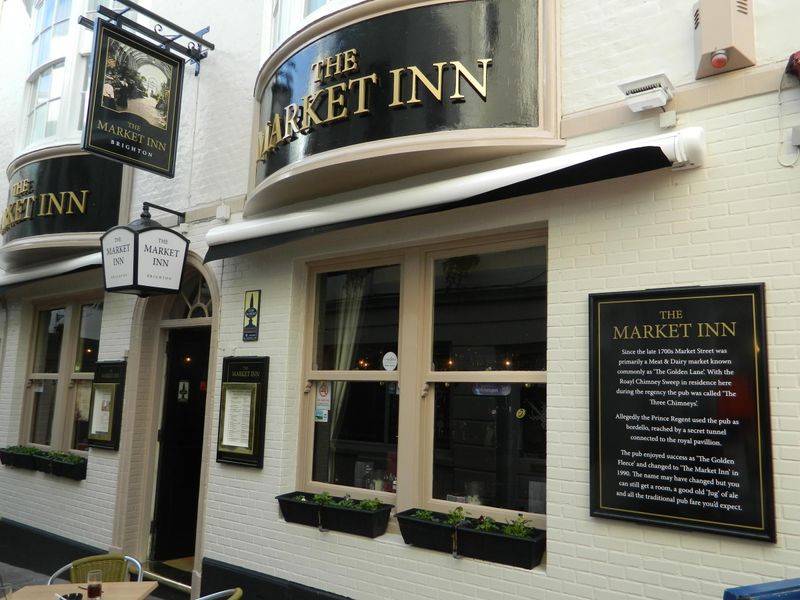
- 10The Market Inn traces its origins to the early 19th century when it was first built as a pair of four-story terraced houses. Located in the historic Lanes area, the building was later converted into the Golden Fleece Hotel. During this early period, the owner was notably the chimney sweep for the Prince of Wales, leading some to call the building "The Three Chimneys". It served as a prominent local landmark until 1990, when it was officially renamed The Market Inn to reflect its proximity to the site of Brighton’s old market hall. The interior of the pub underwent a significant refitting during the inter-war period, approximately in 1930, which established much of the traditional atmosphere visible today. This renovation introduced the central mahogany island bar and several original 1930s brick fireplaces, which are still preserved. While the pub has evolved into its current form as a Grade II listed building, it maintains these historic features alongside modern updates, continuing its centuries-old legacy as a central meeting point in Brighton's oldest quarter.
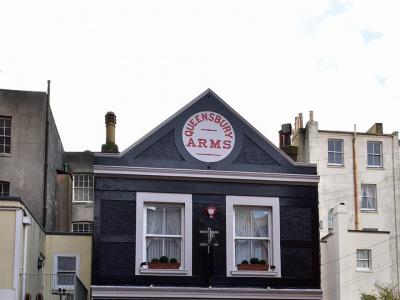
- 11The Hole in the Wall, tucked away in Queensbury Mews, dates back to at least the 1870s and is reputed to be the smallest pub in Brighton. For most of its history, it was known as the Queensbury Arms, named after the Marquess of Queensberry, the patron of modern boxing. Its popular nickname—and current official name—stems from a local legend that fishermen returning from the sea were so malodorous they were not allowed inside; instead, they were served ale through a small hatch or "hole" in the wall. Throughout the 20th century, the pub maintained a strong connection to local sports and entertainment, serving as a famous "boxing pub" with walls once jam packed with pugilistic memorabilia. In later years, it became a favourite of the theatre community, with a longtime manager transforming the interior into an homage to the stage featuring signed original posters. After briefly closing, it reopened in June 2021 under new management, shifting its focus toward a specialist craft and real ale selection. Today, it remains a beloved "hidden gem" near the seafront, recently earning the 2022 CAMRA Pub of the Year award and continuing to be a staple in the 2026 Good Beer Guide.
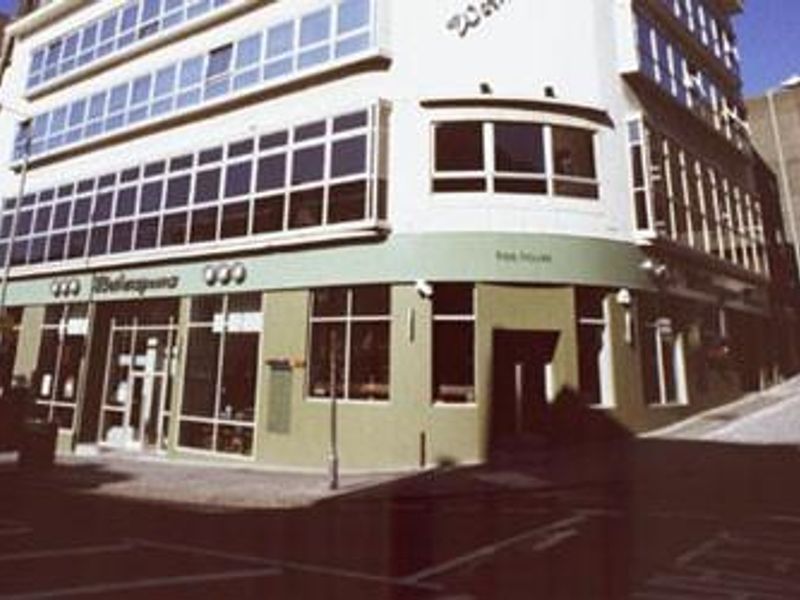
- 12The Bright Helm’s identity is rooted in local heritage, taking its name from "Brighthelm," the original Anglo-Saxon name for Brighton (meaning "Brithelm's homestead") that persisted until the 19th century. The pub is situated in a landmark building on West Street—historically the town's western boundary—that was formerly a branch of the Abbey National bank. While the building’s current aesthetic is modern and airy with large windows, it retains its status as a focal point of West Street’s commercial history. For real ale enthusiasts, the Bright Helm is recognised for its commitment to quality as a Cask Marque accredited venue. The bar typically serves a rotating selection of four to five real ales, often including local staples alongside guest beers from regional and microbrewers. Additionally, the pub frequently participates in the biannual Wetherspoon real ale festivals, showcasing an expanded range of global and domestic craft styles at competitive prices.


Stop 1 of 12
- 1The Post & Telegraph, located on North Street, is housed in a Grade II listed building originally constructed between 1921 and 1923 as a branch of the National Provincial Bank. Designed by the prominent local architects Clayton & Black in a Neoclassical French style reminiscent of Louis XVI, the building features a grand rusticated facade and tall, round-arched windows. For most of the 20th century, it operated as a major financial hub, eventually becoming part of the National Westminster (NatWest) network following a 1968 merger. The pub’s name pays homage to the site’s deeper history as the former headquarters of the Brighton Gazette, Hove Post, and Sussex Telegraph newspapers. These publications occupied the premises before the bank's construction, with the Gazette notably remaining in the city until its final edition in 1981. After the bank branch closed, the building served briefly as a sports bar and nightclub before being acquired by J D Wetherspoon. Opening in December 2010, the pub now combines its architectural heritage—complete with original zodiac-themed door reliefs and sophisticated wooden interiors—with modern services like the Wetherspoon app and a rotation of local real ales.
- 2The Evening Star on Surrey Street is widely celebrated as Brighton’s original craft ale house, having poured beer on the site since 1854. Originally built as part of a terrace for railway workers, the pub served as a standard local for over a century under various owners, including Smithers and Sons and later the Tamplin's brewery empire. Its modern legacy began in 1992 when it became a free house under owners Pete Skinner and Pete Halliday, who transformed the venue into a "permanent real ale festival" that eventually featured nearly 3,000 different beers by the turn of the century. The pub's most significant historical contribution is being the birthplace of the Dark Star Brewing Co, which was founded in its cellar in 1994 using a custom-built "Russian doll" brewing kit designed to fit the cramped space. This microbrewery pioneered the use of American hops in the UK, creating iconic ales like Hophead before moving to larger premises in 2001. Today, the Evening Star remains an independent free house known for its minimalist, "plain" interior—focused entirely on the quality of its 22 taps—and recently received a 2025/2026 CAMRA award for 33 consecutive years of inclusion in the Good Beer Guide.
- 3The Battle of Trafalgar has been a fixture of the Brighton community since at least 1855, serving as a "beerhouse" or public house for over 170 years. Historically, its location near the brickfields and flint pits made it a popular watering hole for local labourers. The pub’s interior reflects its long-standing presence, with architectural plans for significant alterations dating back to 1952–1953. For much of its early life, it was owned by the local Tamplin & Sons brewery from 1882 until they were acquired by Watney’s in the 1960s. In more recent decades, the pub has maintained its reputation as a "quintessential British local," known for resisting modernisation in favour of a traditional, quirky atmosphere. Its name and decor pay tribute to the 1805 naval engagement, with a homely menagerie of nautical-themed prints, photographs, and paintings lining the walls. Through management changes and a notable community effort in 2024 to preserve its traditional character, the pub remains a staple for cask ale enthusiasts and locals seeking an authentic experience just steps from Brighton Railway Station.
- 4The Prince Albert, located at the top of Trafalgar Street, began its life as a three-story town house built in 1848 before being converted into a pub in 1860. Its grandiose Victorian exterior originally served as a hotel for travelers arriving at the nearby Brighton railway station. Over the decades, the pub has evolved into one of Brighton’s most iconic grassroots music venues, hosting live performances since at least the 1970s. Its history is rooted in a "fierce independence," maintaining a family-run atmosphere while resisting the closure of independent venues that has affected much of the city. The pub's historical significance is physically represented on its exterior walls, which have become a landmark for street art. In 2004, the side wall became home to Banksy's world-famous "Kissing Coppers" mural, an original piece that remained on-site until it was removed for preservation and sold at auction in 2014; a replica protected by Perspex stands in its place today. In 2013, the facade was further transformed by local artists into a massive "Icons" mural, featuring over 25 deceased music legends—ranging from John Peel and Kurt Cobain to Amy Winehouse—as a tribute to the pub’s enduring musical heritage. Currently, the Albert continues to be a vital hub for emerging talent, balancing its legacy as a traditional "boozer" with its status as a premier small gig space.
- 5The Lord Nelson Inn, fondly known as "The Nelly," has occupied its site in the North Laine since 1848, officially taking its name in 1854 to honour Admiral Horatio Nelson. For much of its early history, it was a staple of the local Kemp Town Brewery. The building underwent a significant refit during the inter-war period of the 1930s, and it still retains many of these features, including a traditional wooden bar counter. The pub’s modern era began in 1980 when it was acquired by Harvey’s Brewery, making it one of the few long-standing Harvey’s houses in the city. Despite internal updates in 2014 and 2016 to open up the floor plan, the inn has carefully preserved the footprint of its two original front bars, maintaining a rustic and unspoilt atmosphere. Today, it is recognised as a quintessential community hub, celebrated for its well-kept cask ales and its role as a host for local culture, including the long-running music sessions and a regular quiz night.
- 6The Great Eastern, located on the corner of Trafalgar Street in the North Laine, has its roots in the mid-19th century, with records suggesting the building was originally a pub named the "Maud of the Mill". In 1862, it was renamed the Great Eastern, likely taking its name from Isambard Kingdom Brunel’s massive steamship, the SS Great Eastern, which had been launched a few years prior. Architecturally, the pub is a striking example of a traditional corner house, featuring distinctive curved glass doors that have remained largely unchanged since the 1860s. In recent history, the pub became a focal point for community activism in 2019 when its long-term lease under the independent Pleisure Pub Company was threatened by the property owner, Ei Group (now part of Stonegate). A petition signed by over 4,000 regulars successfully lobbied for the pub to maintain its unique character and "spirit-specialist" focus during the transition. Today, it is celebrated as a "proper pub" devoid of TV screens and gaming machines, instead focusing on its massive whiskey and bourbon collection and rotating cask ales.
- 7The Basketmakers Arms on Gloucester Road originated in 1852 as a combined home and workshop for Thomas Knight, a local artisan who specialised in making wicker baskets and sieves. By 1855, Knight diversified his business by selling beer from his shop, initially naming the establishment the Brokers Arms. As the beer house grew in popularity over his original trade, he officially renamed it the Basketmakers Arms by 1862, a nod to the thriving local industry that once defined this quarter of the North Laine. The pub is famously recognised for its interior, which serves as a living archive of its long history. Its most distinctive feature is a vast collection of vintage tobacco tins—some dating back to the 1850s—which are fixed to the walls and filled with handwritten notes, poems, and secrets left by generations of patrons. Managed by the legendary landlord Peter "Blue" Dowd for nearly 30 years starting in the late 1980s, the pub transitioned from a free house to a Gale’s tied house before being acquired by Fuller’s in 2005. Despite these corporate changes, it has maintained its reputation as a Brighton institution, winning numerous awards for its cask ales and locally sourced seafood.
- 8The King and Queen was established in 1779 when an existing farmhouse was granted a liquor license to serve agricultural workers and spectators attending cricket matches on the nearby Steine. Named in honour of King George III and Queen Charlotte, the original building was a bow-fronted Georgian structure. Throughout the 19th century, the pub became a vital hub for local commerce, serving as the headquarters for the Brighton Corn Exchange every Thursday until the market moved to its current location in 1868. It also maintained a close relationship with the adjacent Church Street infantry barracks, even featuring a dedicated serving hatch to provide "thirsty soldiery" with liquid refreshment. The pub's current iconic appearance dates to a major rebuilding project in 1931–32 by renowned local architects Clayton and Black. They transformed the Georgian inn into an elaborate Mock Tudor landmark, complete with decorative timber framing, heraldic stained glass, and a cavernous interior designed to resemble a medieval nobleman’s hall. While the new facade prominently features figures of Henry VIII and his queens to match the architectural style, the pub’s name remains a tribute to its original 18th-century royal namesakes. In recognition of its unique interwar revivalist design, the building was awarded Grade II listed status in 1997
- 9The Brighton Bierhaus, located on Edward Street, occupies a Grade II listed building that began as a Regency townhouse before being converted into a pub in 1830. Originally known as the Thurlow Arms, it was likely named after the former Lord Chancellor, Baron Thurlow, and stood as one of 27 bustling pubs on a street once famous for its high density of drinking establishments. Over the following century, it served as a local fixture until drinking habits shifted in the 1950s, eventually operating under the name The Jury's Out as a tied house. The pub’s current identity was established in April 2017, when the local Brighton Bier brewery saved the building from potential redevelopment into residential units. After an extensive renovation that included a total rewiring and the installation of a custom-designed cellar system to minimise the distance between keg and glass, it reopened as the brewery's flagship taproom. Today, it is recognised as a premier destination for craft beer enthusiasts, boasting the city's largest selection of Belgian and German beers alongside its own international award-winning local brews. Despite the closure of the Brighton Bier production brewery in mid-2025, the Bierhaus remains a featured staple in the CAMRA Good Beer Guide 2026.
- 10The Market Inn traces its origins to the early 19th century when it was first built as a pair of four-story terraced houses. Located in the historic Lanes area, the building was later converted into the Golden Fleece Hotel. During this early period, the owner was notably the chimney sweep for the Prince of Wales, leading some to call the building "The Three Chimneys". It served as a prominent local landmark until 1990, when it was officially renamed The Market Inn to reflect its proximity to the site of Brighton’s old market hall. The interior of the pub underwent a significant refitting during the inter-war period, approximately in 1930, which established much of the traditional atmosphere visible today. This renovation introduced the central mahogany island bar and several original 1930s brick fireplaces, which are still preserved. While the pub has evolved into its current form as a Grade II listed building, it maintains these historic features alongside modern updates, continuing its centuries-old legacy as a central meeting point in Brighton's oldest quarter.
- 11The Hole in the Wall, tucked away in Queensbury Mews, dates back to at least the 1870s and is reputed to be the smallest pub in Brighton. For most of its history, it was known as the Queensbury Arms, named after the Marquess of Queensberry, the patron of modern boxing. Its popular nickname—and current official name—stems from a local legend that fishermen returning from the sea were so malodorous they were not allowed inside; instead, they were served ale through a small hatch or "hole" in the wall. Throughout the 20th century, the pub maintained a strong connection to local sports and entertainment, serving as a famous "boxing pub" with walls once jam packed with pugilistic memorabilia. In later years, it became a favourite of the theatre community, with a longtime manager transforming the interior into an homage to the stage featuring signed original posters. After briefly closing, it reopened in June 2021 under new management, shifting its focus toward a specialist craft and real ale selection. Today, it remains a beloved "hidden gem" near the seafront, recently earning the 2022 CAMRA Pub of the Year award and continuing to be a staple in the 2026 Good Beer Guide.
- 12The Bright Helm’s identity is rooted in local heritage, taking its name from "Brighthelm," the original Anglo-Saxon name for Brighton (meaning "Brithelm's homestead") that persisted until the 19th century. The pub is situated in a landmark building on West Street—historically the town's western boundary—that was formerly a branch of the Abbey National bank. While the building’s current aesthetic is modern and airy with large windows, it retains its status as a focal point of West Street’s commercial history. For real ale enthusiasts, the Bright Helm is recognised for its commitment to quality as a Cask Marque accredited venue. The bar typically serves a rotating selection of four to five real ales, often including local staples alongside guest beers from regional and microbrewers. Additionally, the pub frequently participates in the biannual Wetherspoon real ale festivals, showcasing an expanded range of global and domestic craft styles at competitive prices.
About this crawl
A real ale pub crawl around central Brighton
Make it yours
Not quite your route?
Remix this crawl to swap pubs, reorder stops and save your own version. Or just run it backwards.